Vacant retail shops, rear façades blanked off, and delivery corridors created unpleasant spaces.
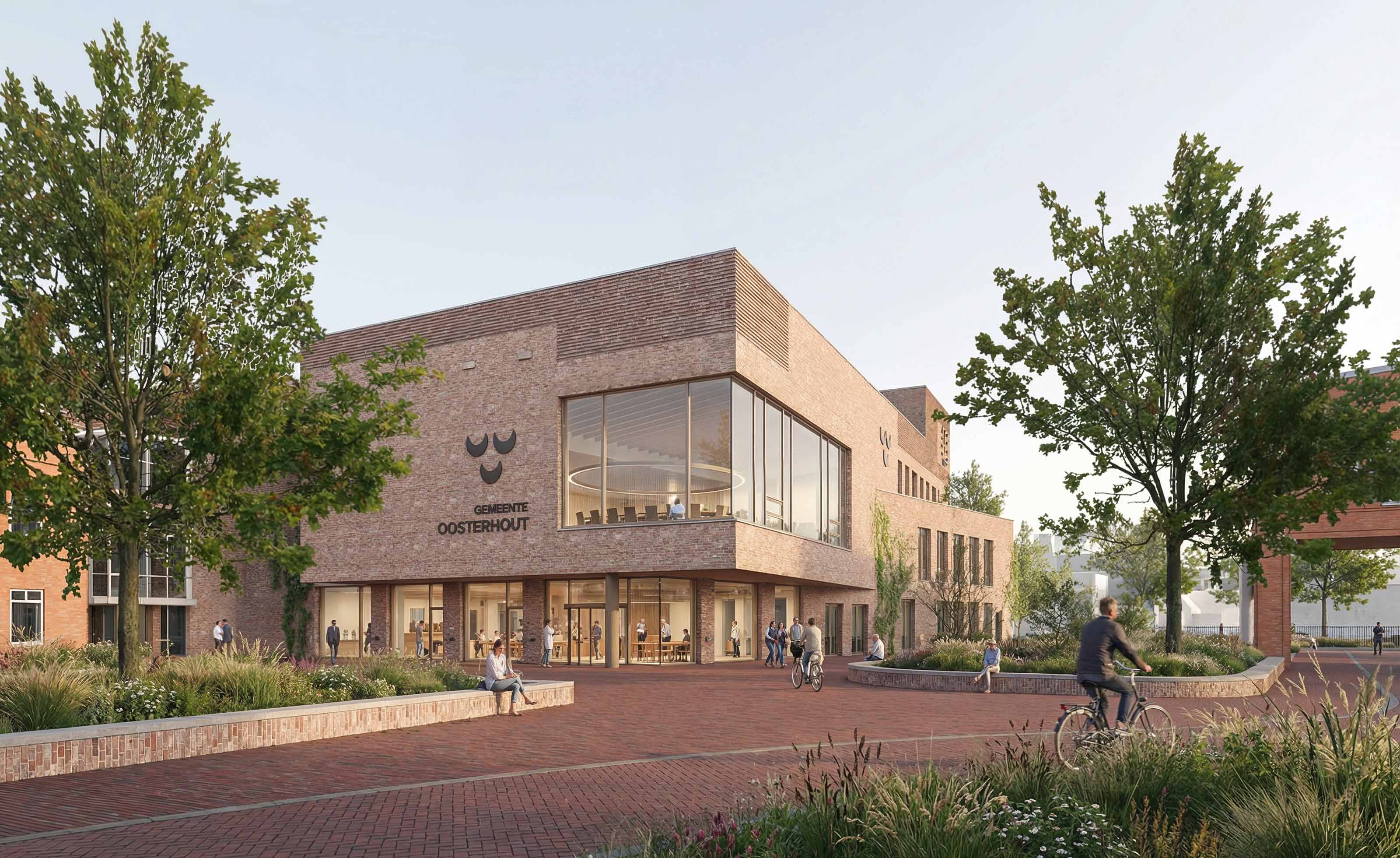
The new town hall brings liveliness and vitality back to the city centre.
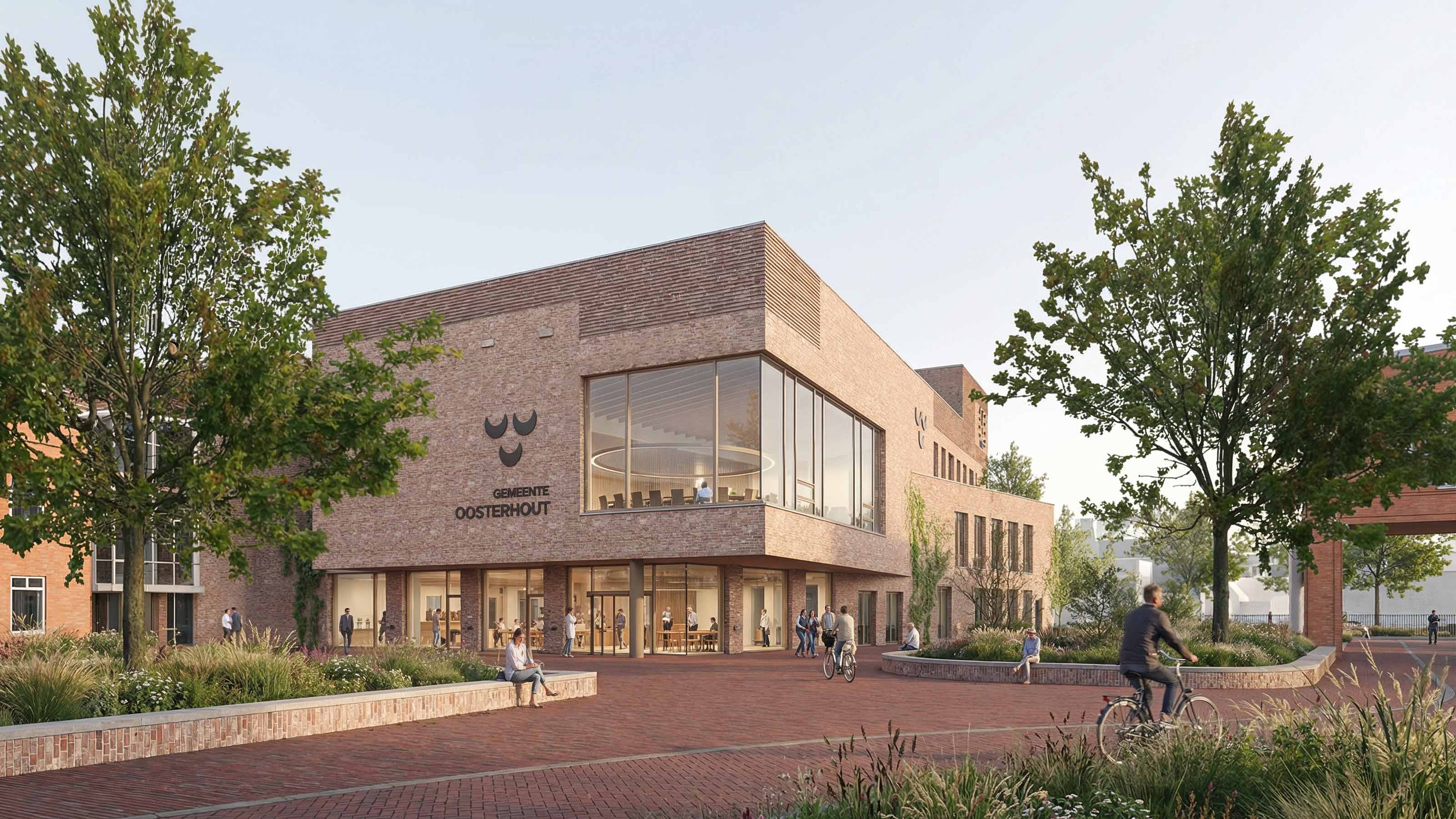
In the heart of Oosterhout, a forward-looking town hall is taking shape with a clear ambition for the town centre. By transforming Arendshof 2 shopping centre into the new town hall, it will become a place where residents, entrepreneurs, civil servants and the council can meet with ease. In this way, liveliness returns to the town centre for everyone.
Context and ambition
The plan provides for about 8,000 m² for the town hall, a 7,500 m² car park and 2,500 m² of commercial space. The starting point is clear: the current town hall no longer meets needs and the inner city experiences vacancy. By gradually transforming Arendshof 2 Shopping Centre into a municipal meeting place, liveliness and livability are brought back. At the same time, the amount of retail space, much of it vacant, is consciously reduced. The new town hall thus gives a fitting fulfilment of the ambitions in the urban design plan. The plan places a lot of emphasis on pedestrians, a fine-grained network and historic street patterns. EGM delivers with the design of this transformation not only a high-quality town hall, but also contributes to more liveliness and vitality in the centre and to an improvement of public services.
Urban planning and design
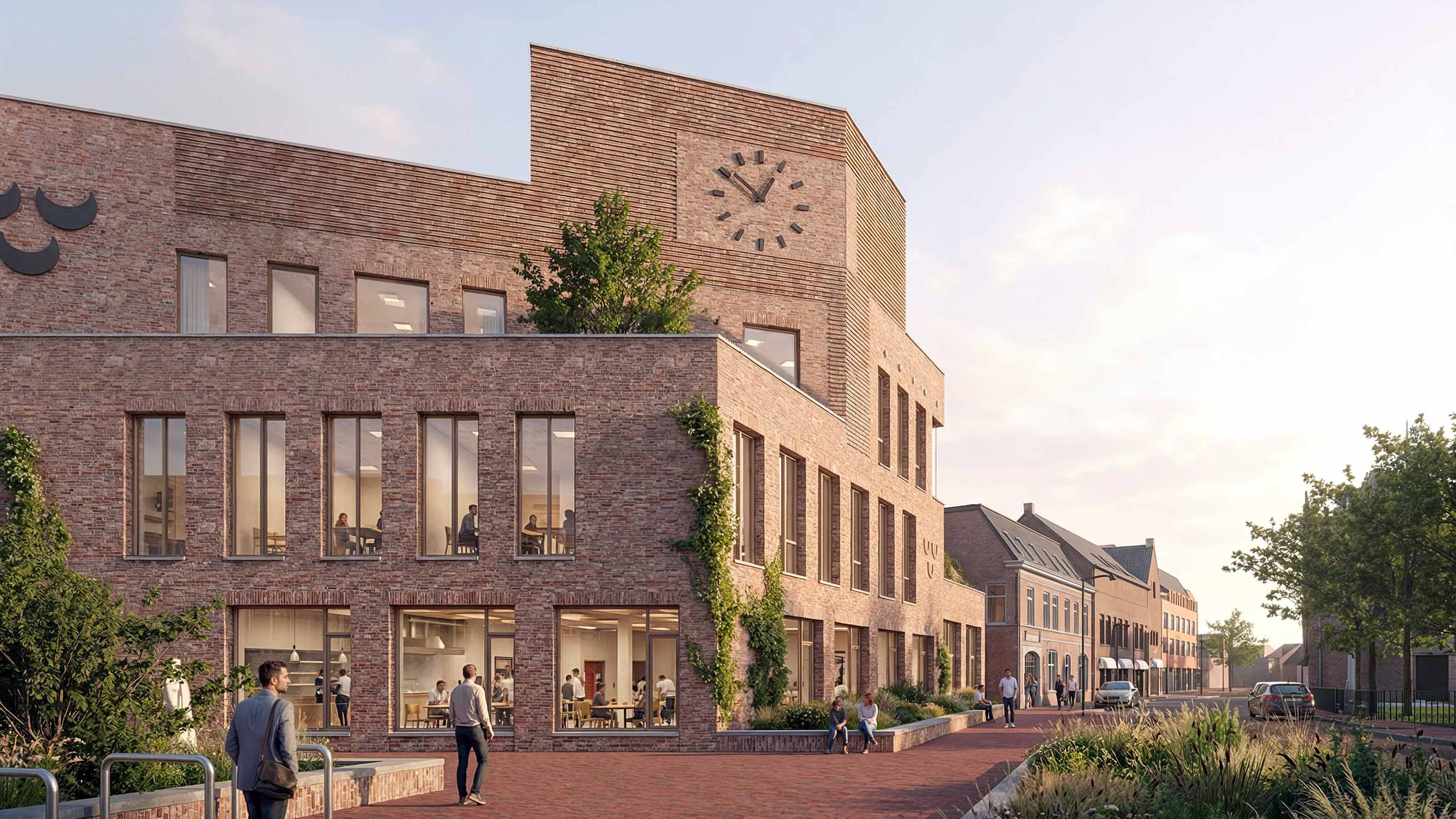
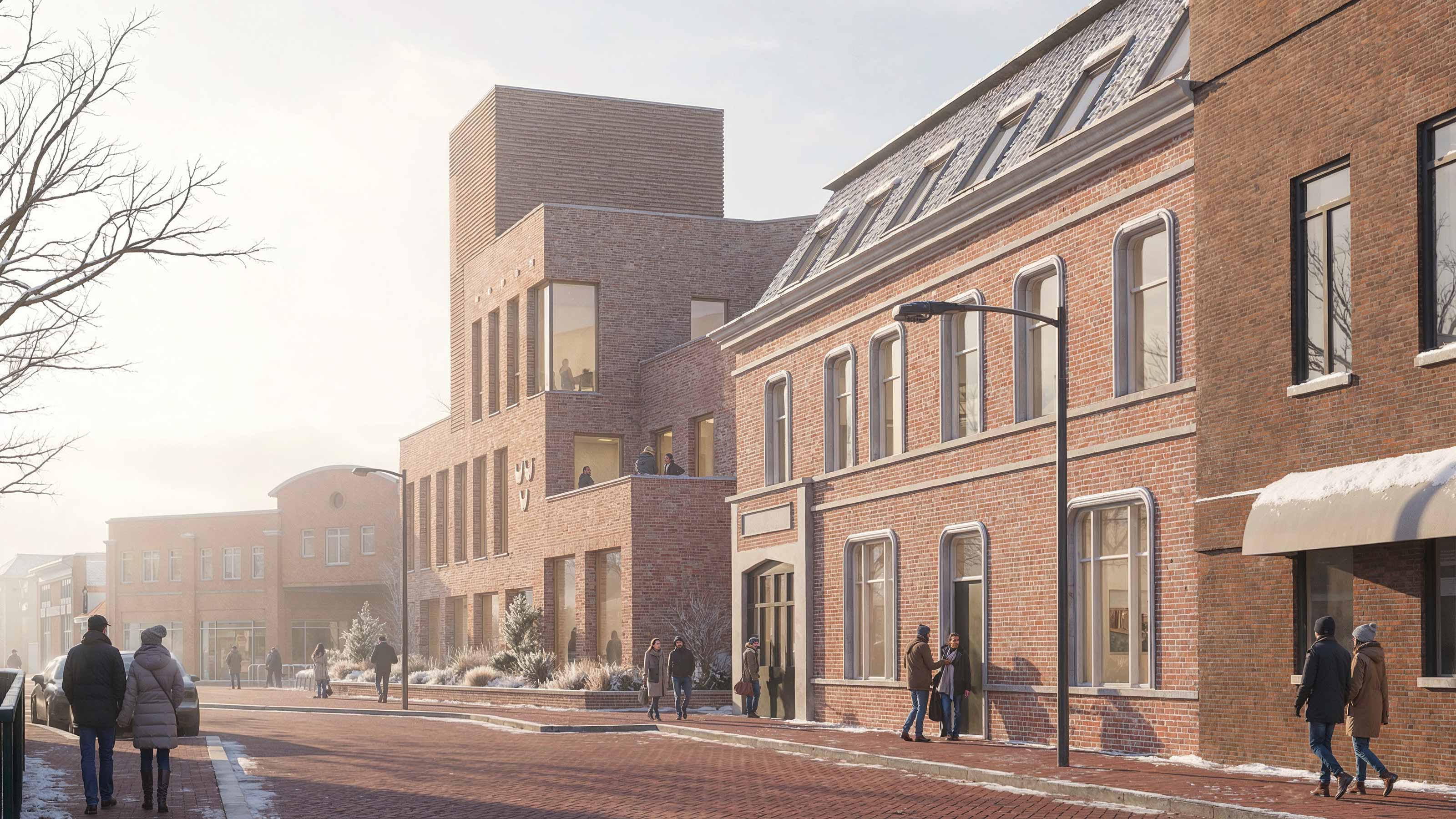
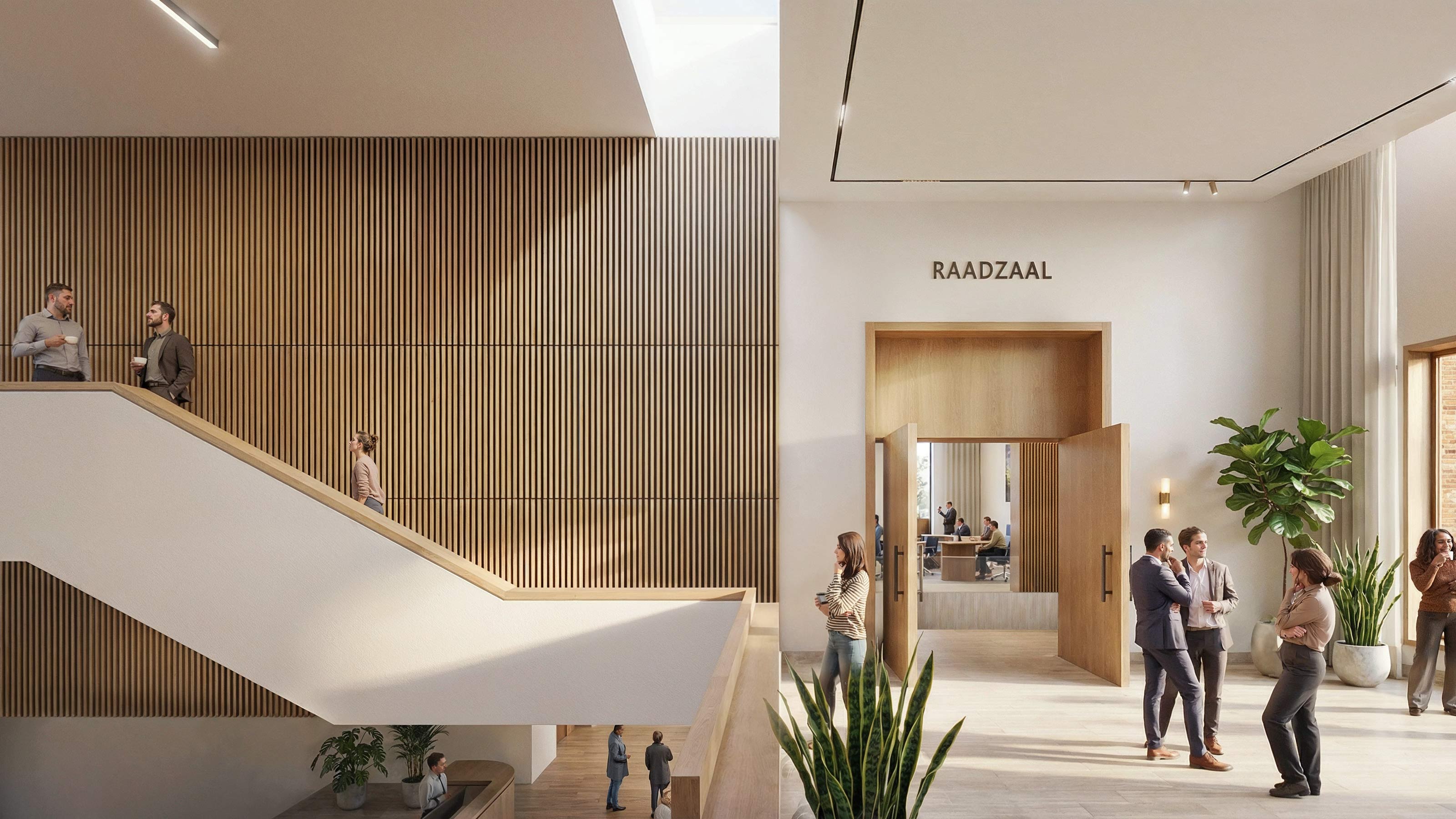
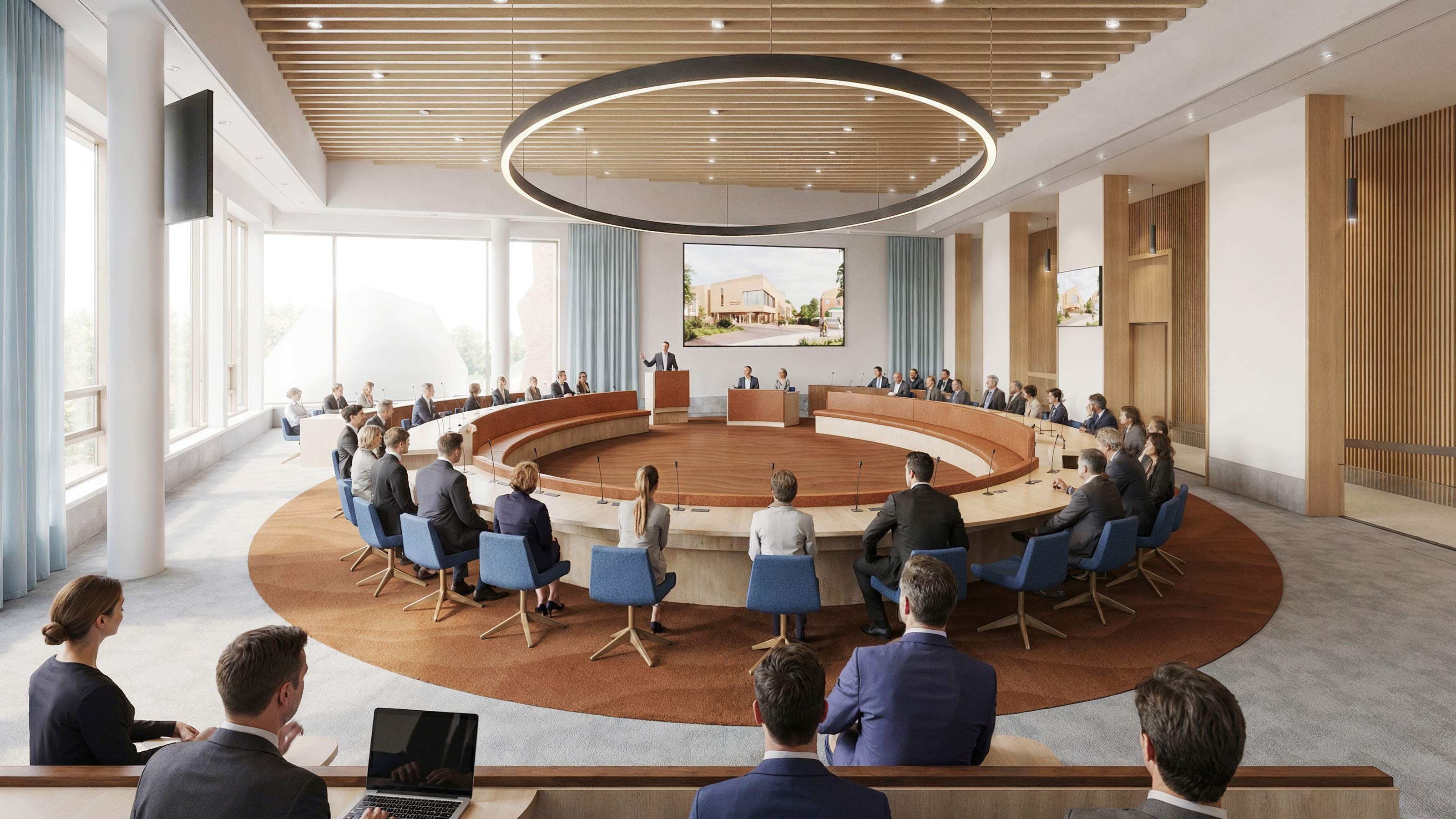
The town hall acts as a driver for renewal and at the same time offers clear public functions that residents of the municipality expect. Clear choices have been made to avoid a “closed back” of the building, to be maximally attractive from adjacent streets and to remain compact, thereby naturally connecting to the historic core. The main entrance is on the south side with a forecourt that enhances urbanity. The council chamber will be clearly visible from the forecourt, symbolising local democracy. A small clock tower, in line with Nieuwstraat, increases visibility and reinforces the public character of the building. Parking and the town hall are two separate and architecturally distinct buildings. It helps to maintain the intimate feel of the town centre. Part of the shopping centre remains recognisable after the transformation, while two new high-quality outdoor spaces add much to the quality of stay. The brick façades refer to the history and identity of the place.
Spatial planning and use
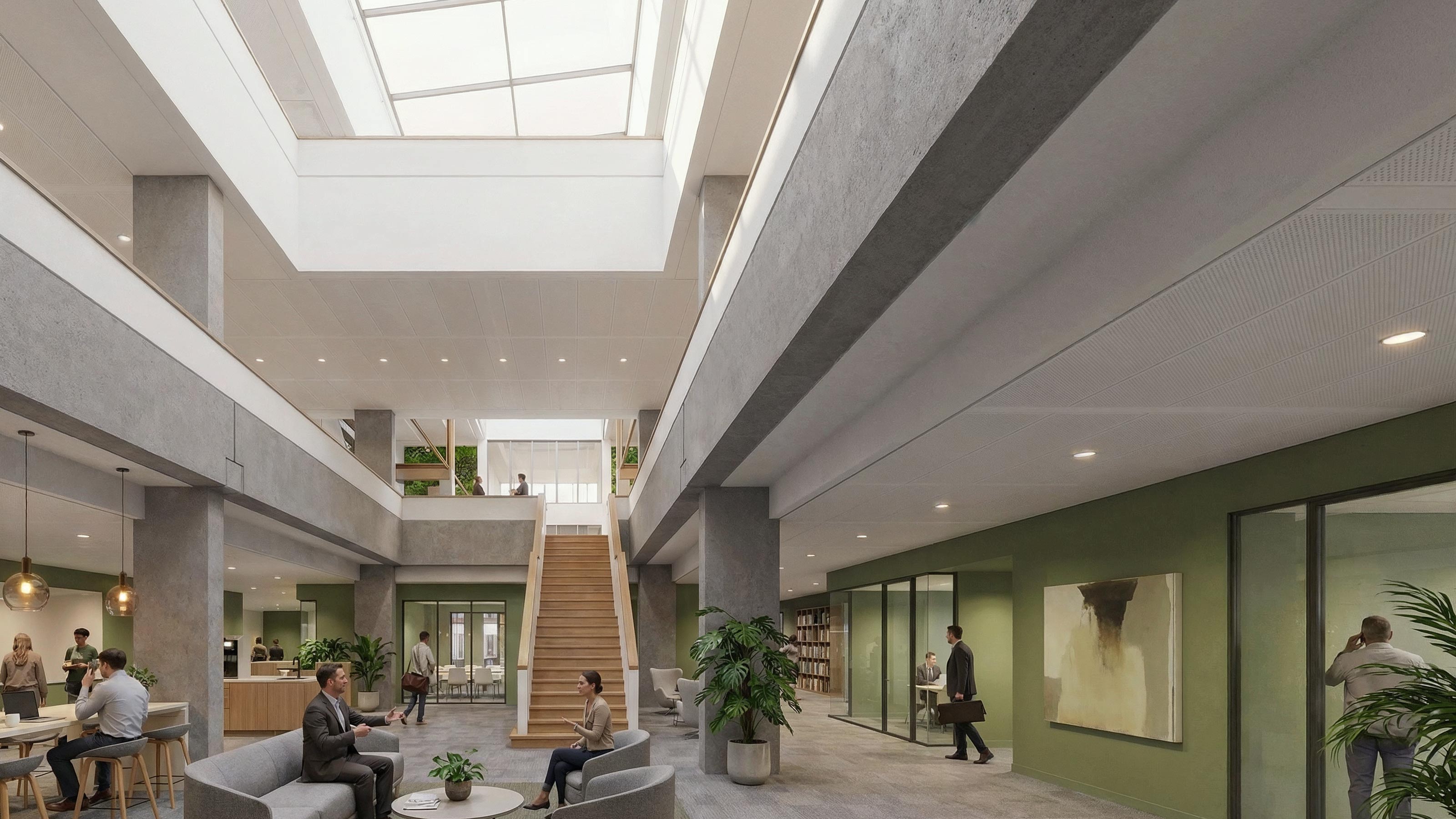
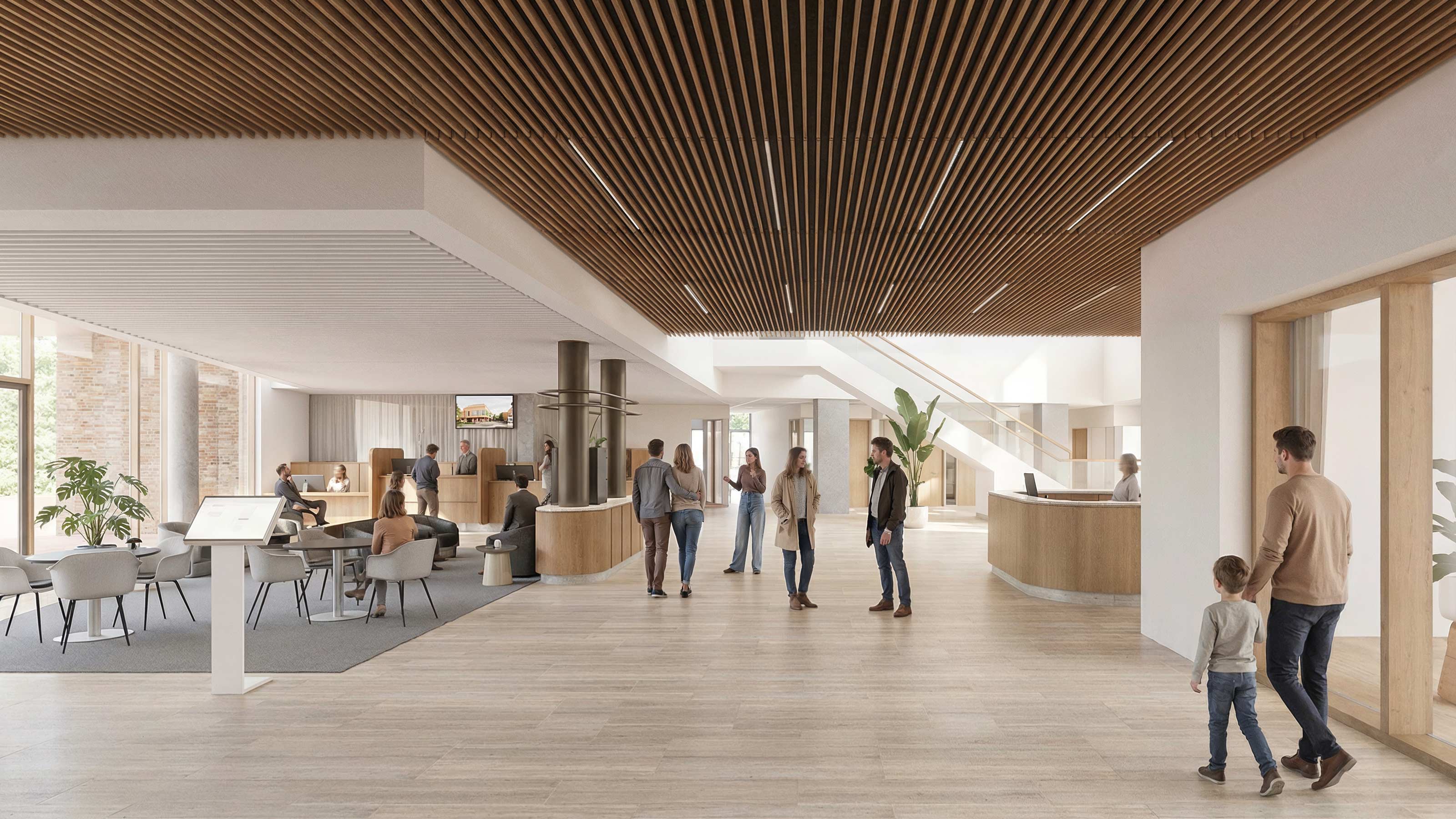
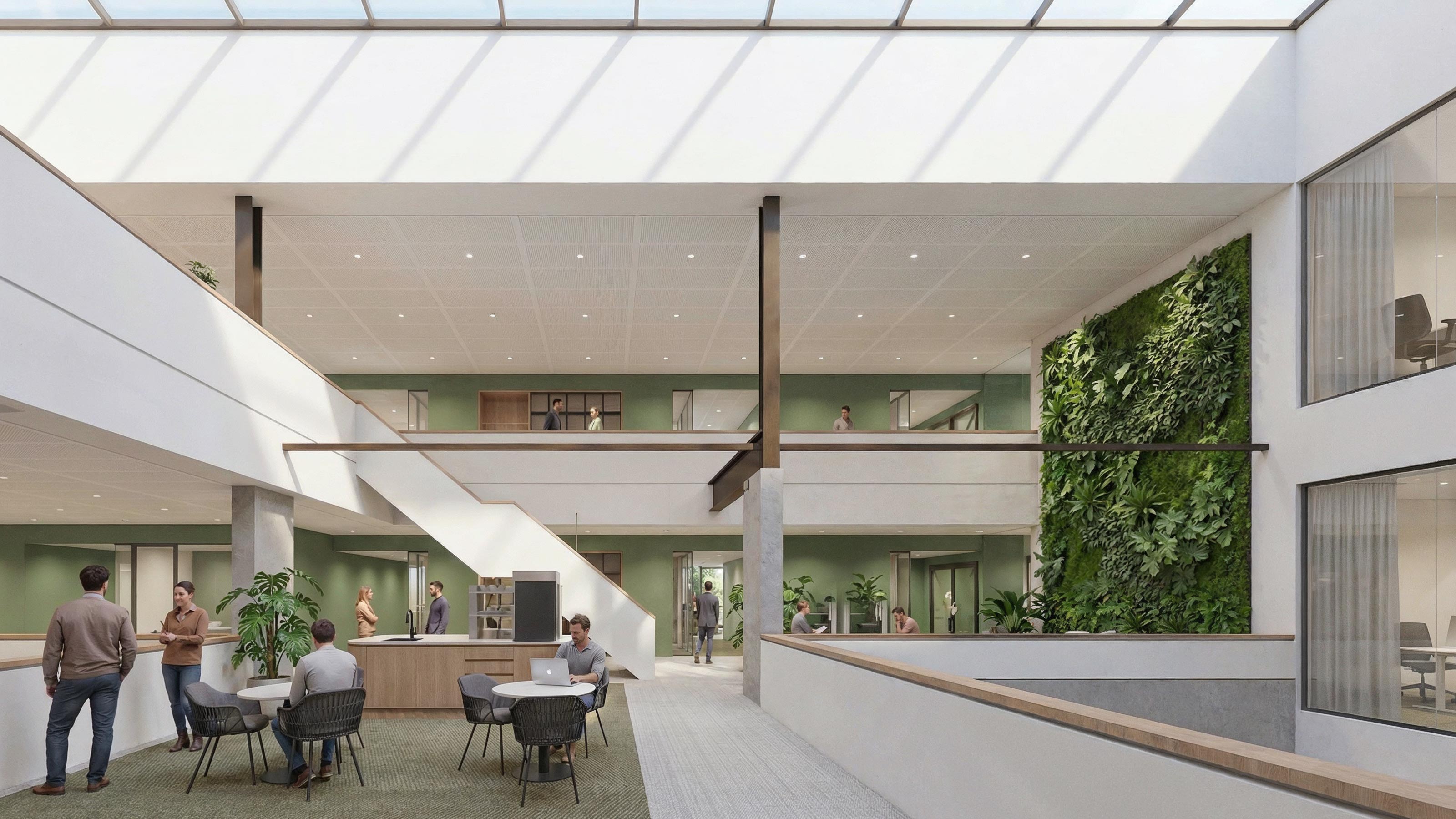
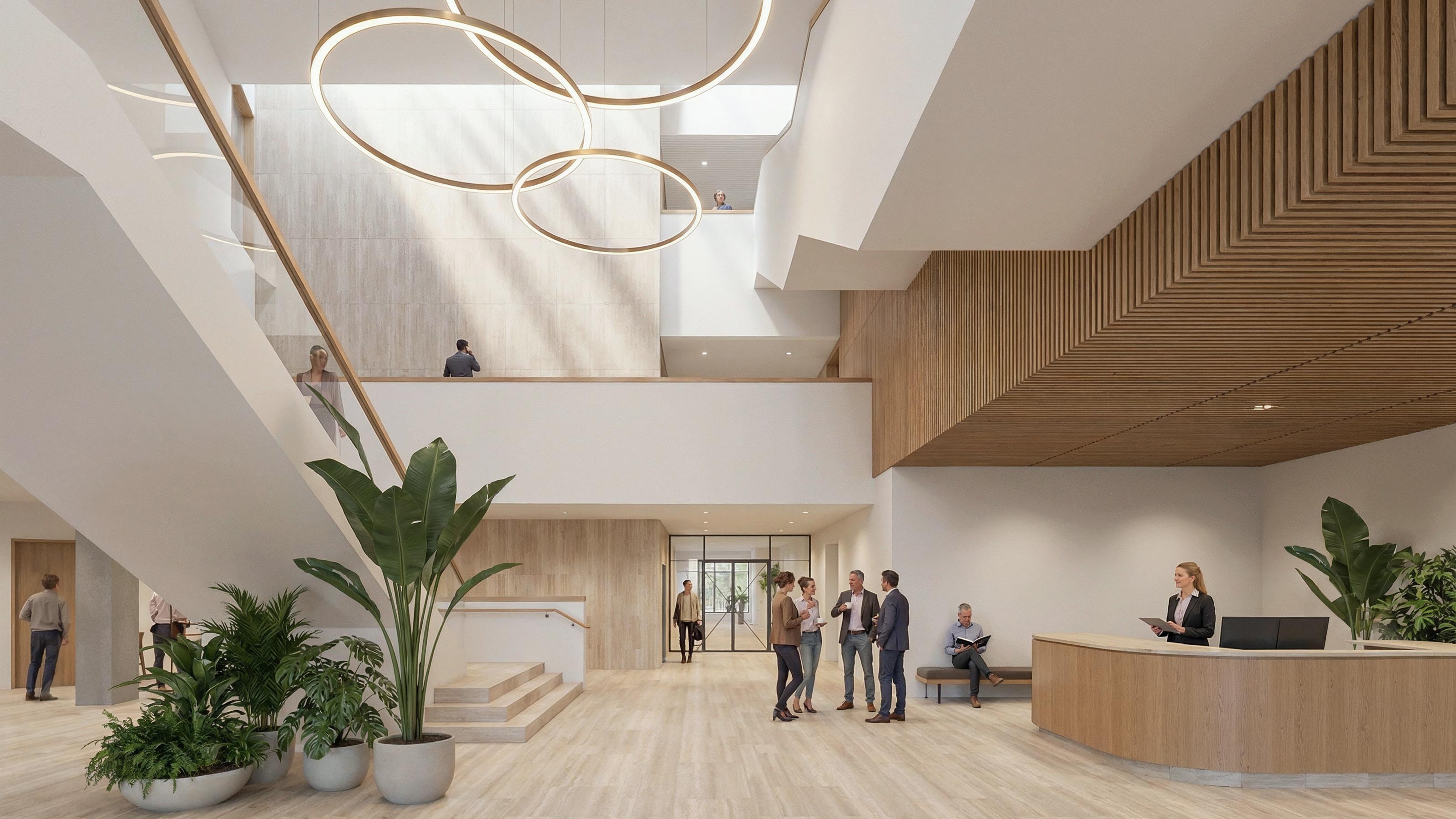
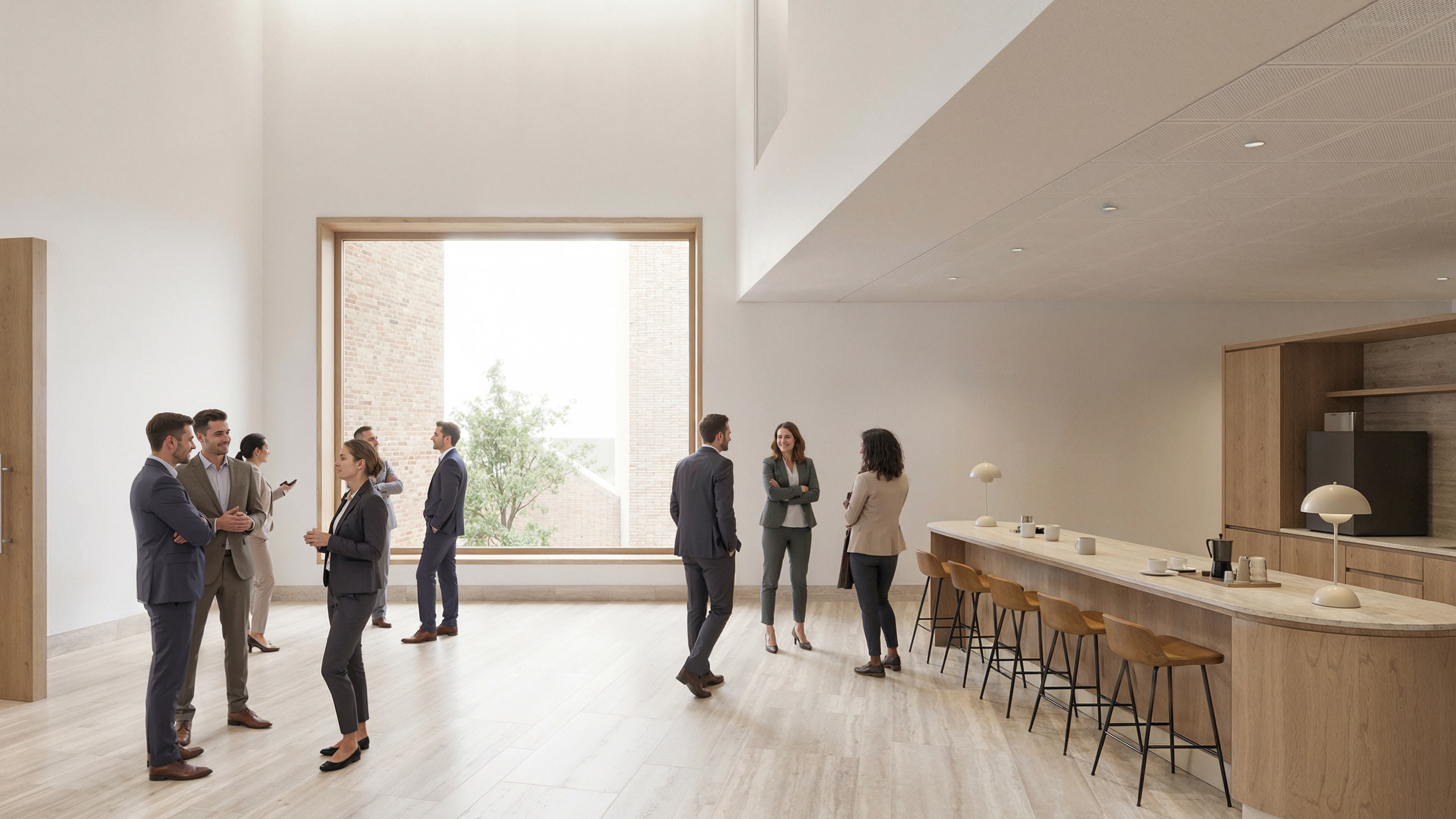
The design follows a clear spatial programme with three layers of public service, semi-public functions and the civil service domain. A central atrium brings these worlds together and provides plenty of daylight in the building. The floor plan has been designed very carefully so that collaboration is stimulated in a natural way. It is also possible for the municipality to implement future organisational changes within the building relatively easily. The former shopping passage returns almost unrecognisably and functions as a social core with coffee corners and informal meeting places that emphasise the human character of civil service work. The council chamber is visible from the forecourt and symbolises local democracy, while materials respect the historic context and at the same time give an accessible, contemporary appearance.
Sustainability and social value
The transformation of the shopping centre into a town hall makes the greatest possible contribution to circular ambitions. Reuse of what is already on site has, in fact, a much lower CO? footprint than new-build. The shell remains largely intact, and if necessary—for example for the council chamber—a lightweight hybrid construction is used for the extension. By a compact building footprint, energy demand remains limited. The solar panels on the roof generate sufficient energy for the new town hall. In combination with other sustainability measures, this yields a draft A+++++ energy label and a net-zero-energy performance. The exterior façade consists of reused brickwork. These bricks give a warm and well-worn appearance. It provides a nice contrast between the contemporary architectural form and a building that fits well with the historic context. The new town hall yields much more than a new functional building. It becomes a lively centre that brings together living, working and meeting, stimulates economic momentum and strengthens the livability of the town centre. The expectation is that the council can commence works in early 2026. Initially this will consist of demolition and preparatory works.
Team
EGM architects: Victor de Leeuw, Vincent Ketting, Frank Morel, Avelien Thoben, Stefan de Kruijf, Noah van Asselt, Meliha Sibonjic–Dedic, Hans de Man, Wessel van Elburg, Marc Wapstra, Toon van Boksel, Sjoerd Verboom