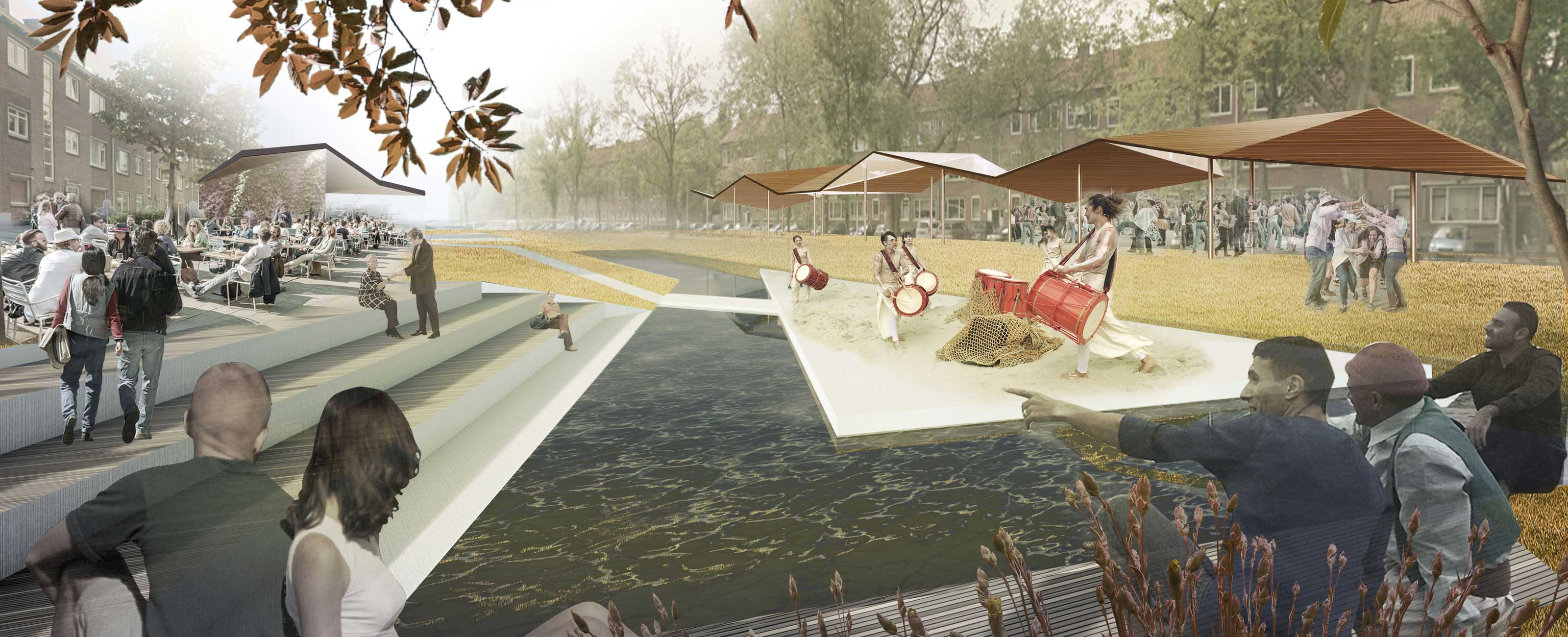
From Health Needs to Health Skills
“High-potential locations are not the only gems. So too are the people living in the neighbourhood”
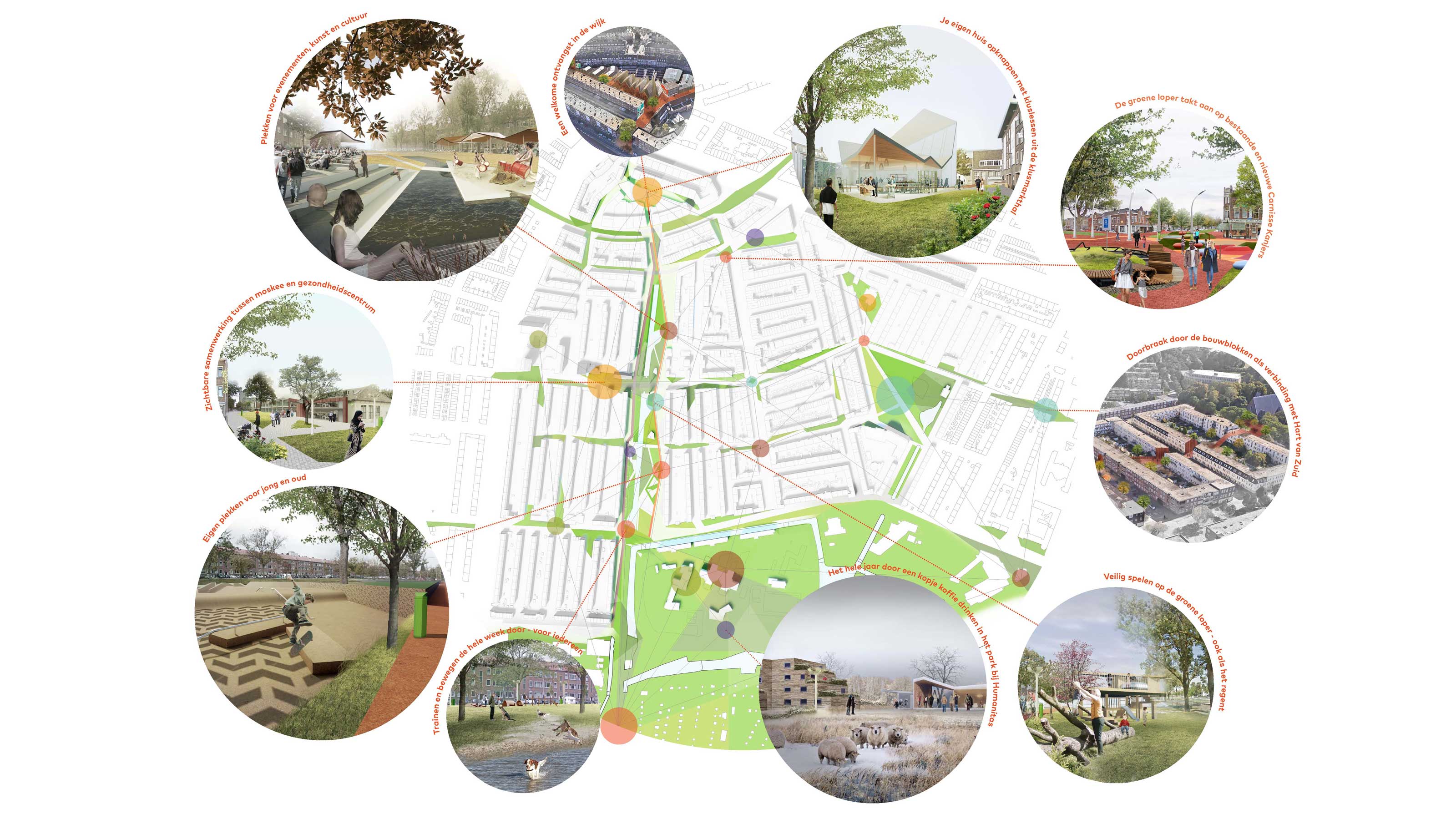
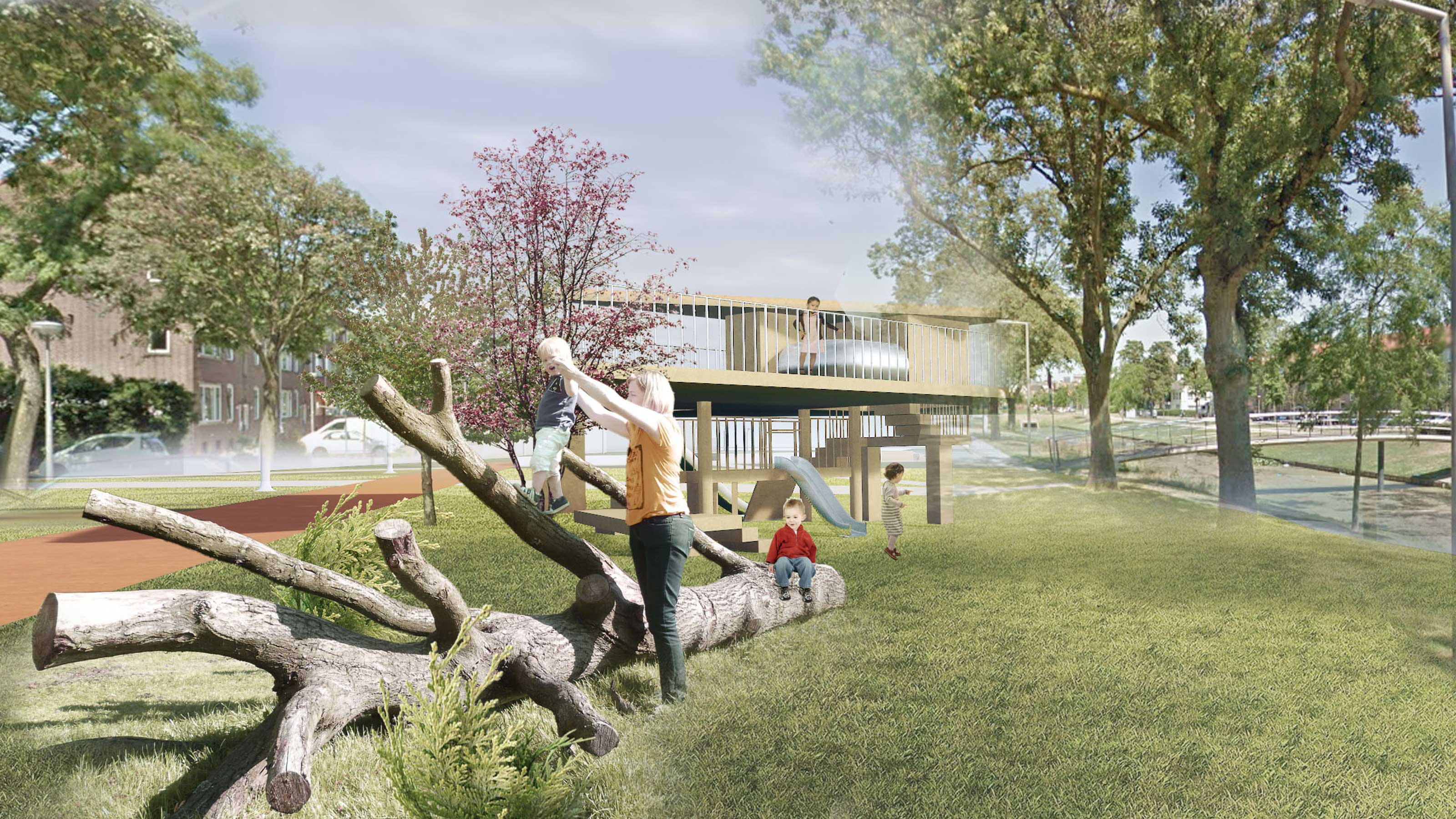
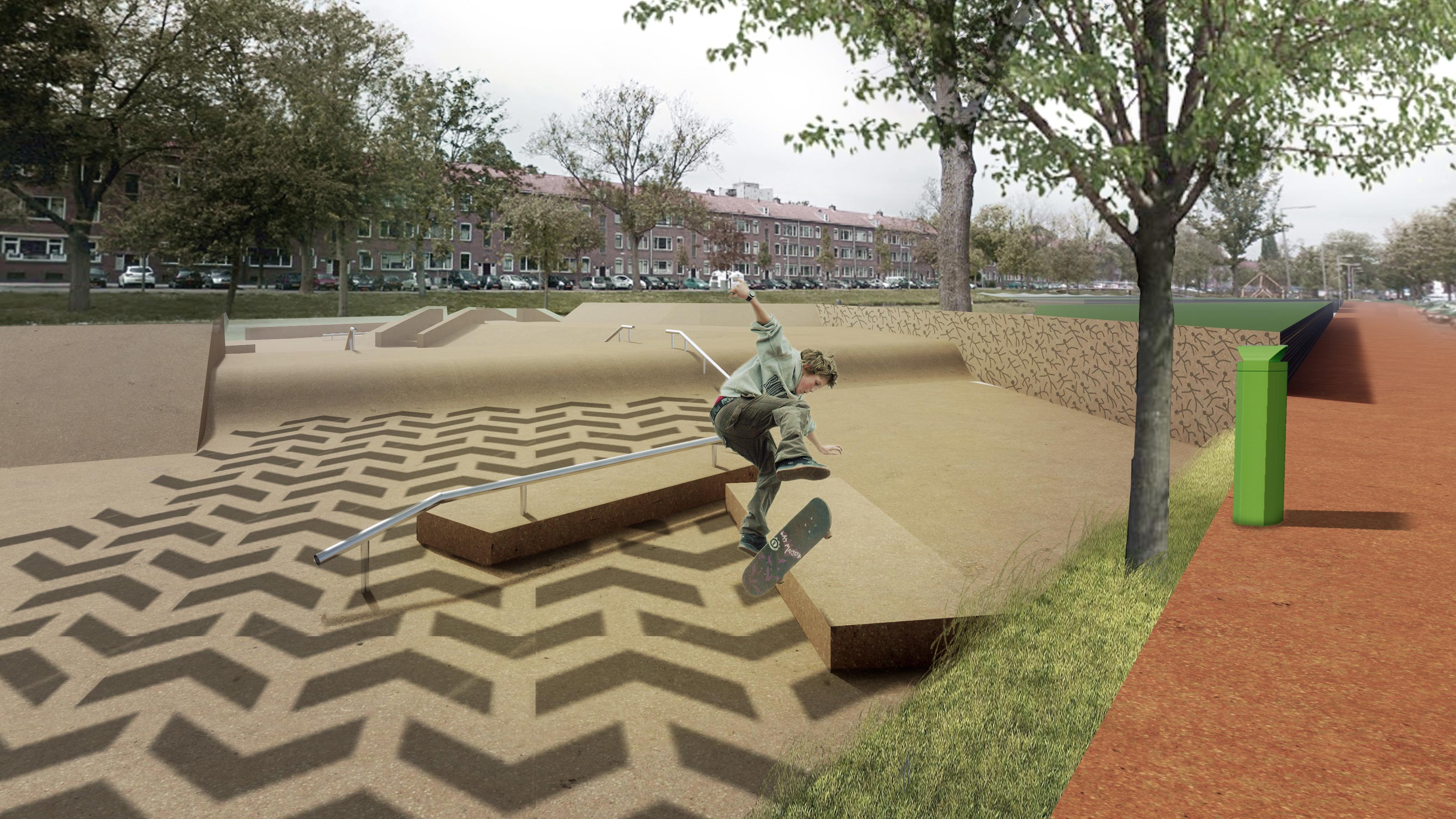
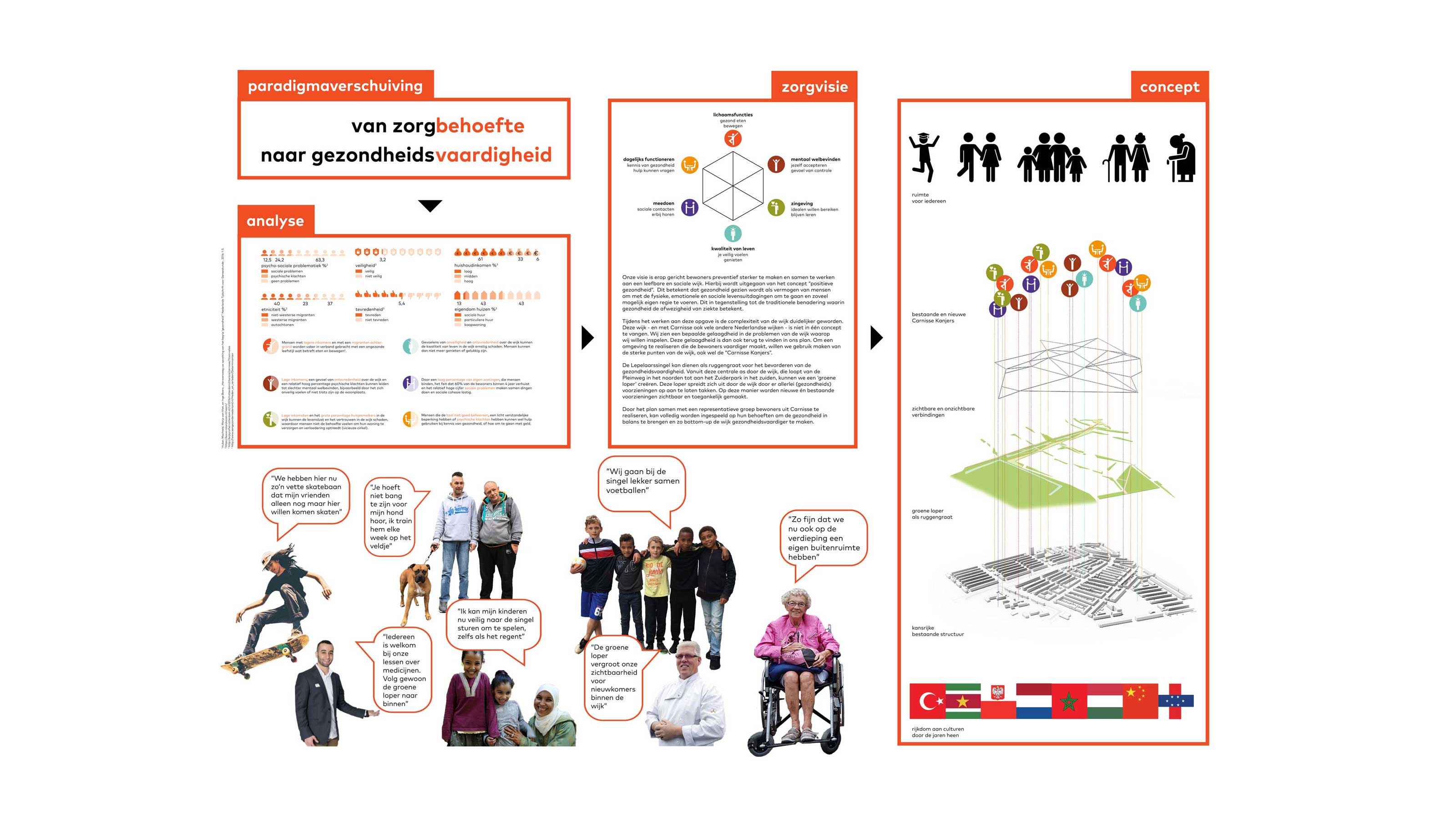
For the Rotterdam district of Carnisse, EGM developed the vision From Care Demand to Health Capability. The proposal focused on creating a liveable and socially connected neighbourhood in which residents gain greater control over their health and living environment. By establishing new connections between healthcare, wellbeing, and housing, the vision created a strong foundation for a healthy and resilient community.
Positive health
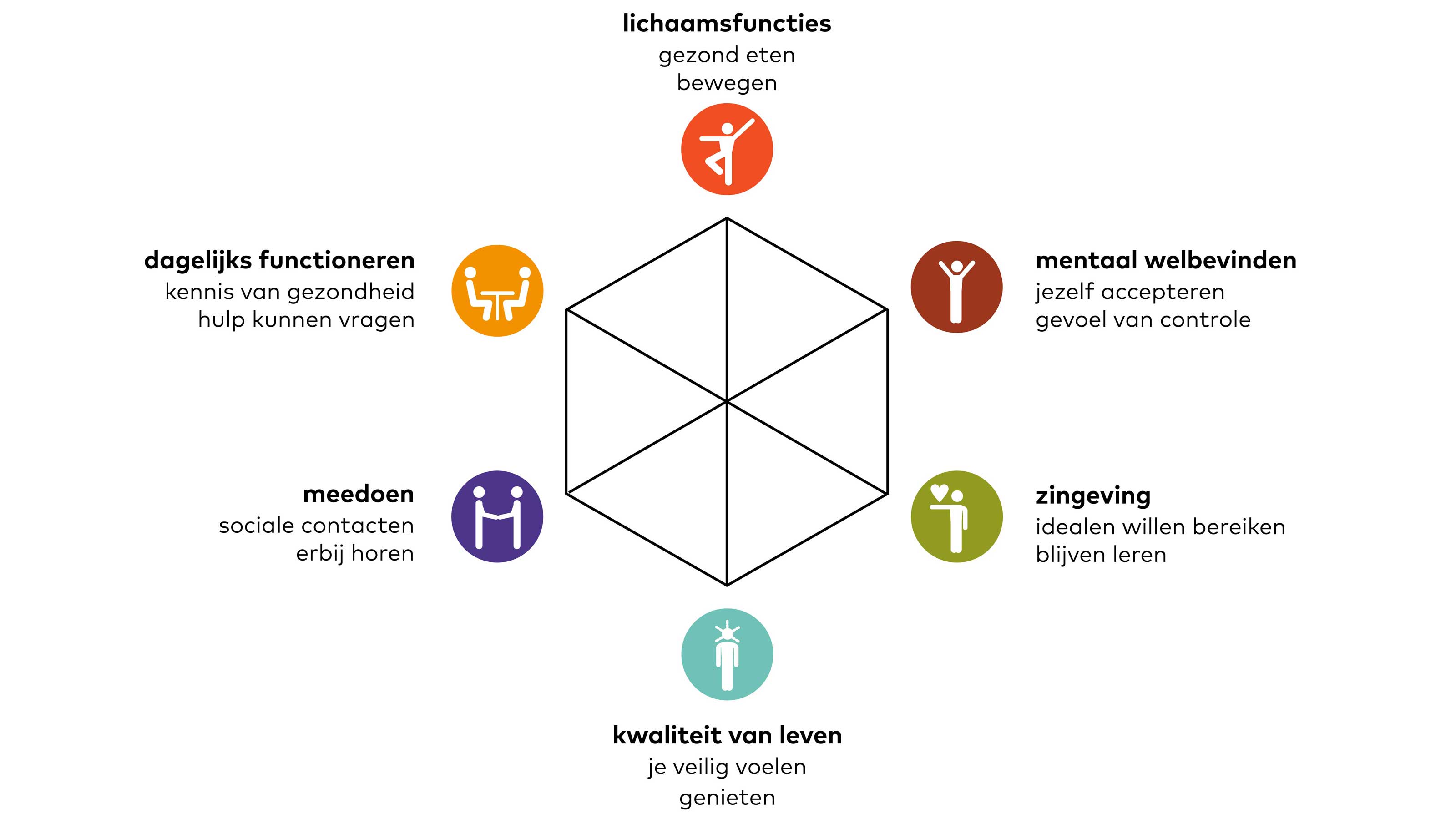
From Care Demand to Health Capability focused on empowering residents and strengthening the social and spatial quality of the neighbourhood. Central to the vision was the concept of positive health, in which health is understood as people’s ability to cope physically, emotionally, and socially, while maintaining as much autonomy and control over their lives as possible.
Carnisse Colossus
Like many Dutch neighbourhoods, Carnisse contains a layered combination of challenges and qualities. To strengthen the neighbourhood’s health capability, the vision built upon its existing strengths — the so-called Carnisse Champions: buildings, places, and organisations with which residents already feel strongly connected.
The proposal addressed three key themes: participation, daily functioning, and physical health. The neighbourhood could, for example, be designed to encourage social interaction, stimulate physical activity, and improve access to healthcare and support services.
The green carpet
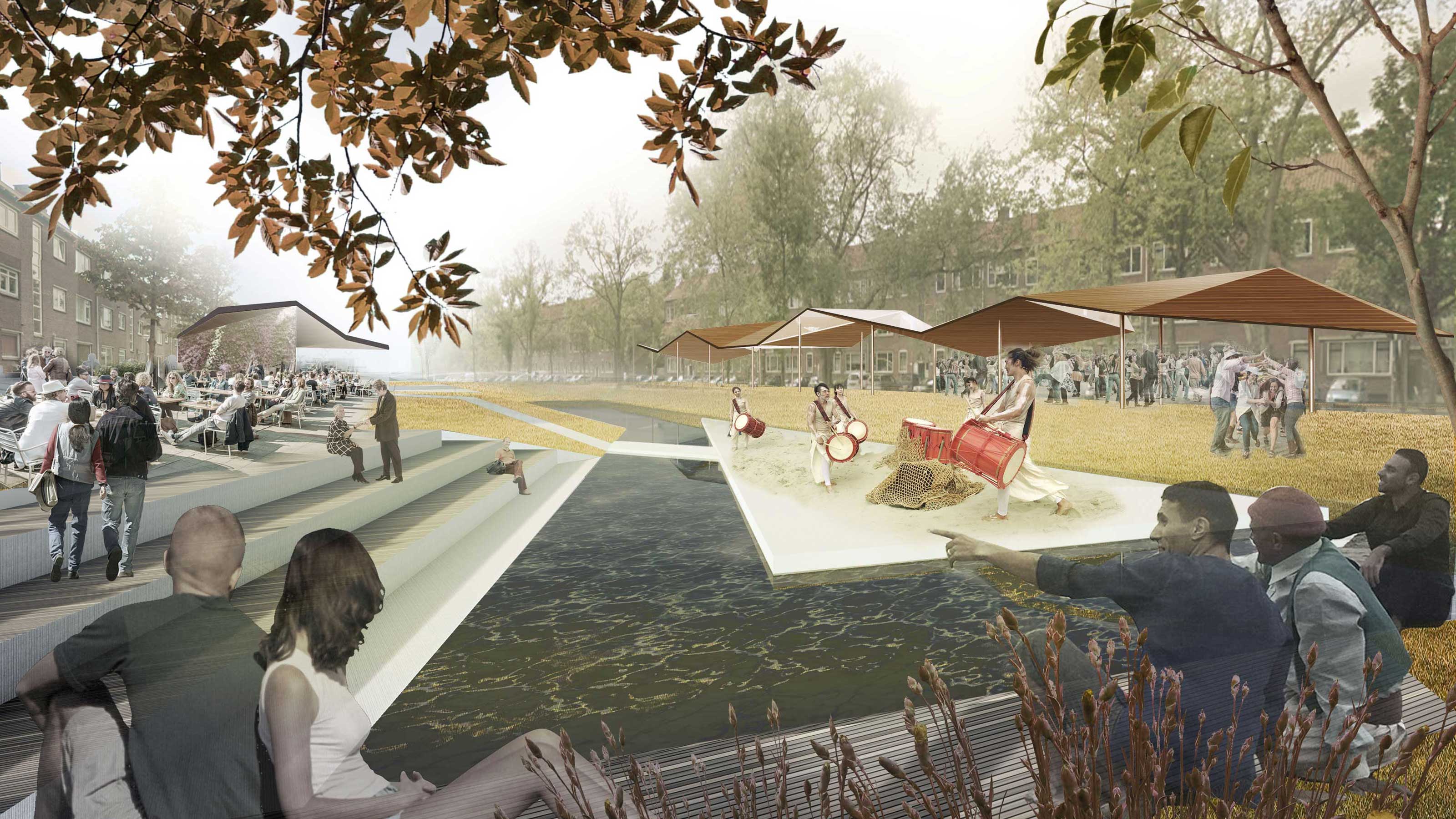
To visibly connect existing opportunities and future facilities, EGM proposed a Green Spine along the Lepelaarsingel. This central route links the Pleinweg to the Zuiderpark and is easily accessible from all parts of the neighbourhood. By introducing green zones, seating areas, lighting, and sustainable interventions, the route became a recognisable and inviting structure through the district. Green façades also formed part of this urban landscape strategy.
Visible and accessible
The Green Spine connected both existing and new facilities, including schools, places of worship, community spaces, healthcare buildings, the health centre, and the neighbourhood centre. This made these functions more visible and accessible to residents. By working closely together with the community, the vision was able to directly respond to local needs and contribute to a healthier, safer, and more connected living environment.
Design team
Who Cares has been design by an interdisciplinary team with:
- EGM r&d - Willemineke Hammer (partner architect), Merel Brabers (ontwerper, filosoof en researcher) en Chico Leufkens (architect)
- NIVEL - Nederlands Instituut voor onderzoek van de gezondheidszorg: Liset van Dijk (sociologist)
- Radboudumc Nijmegen - René Bleeker (Director Project office Build), Geraline Leusink (Associate Professor Eerste Lijns Geneeskunde)
- Cappello Bordò Consultancy - Gerben Sanders (humanistiek, resident Carnisse)
- Kwadrant Groep, Laurens - Pieter de Kort (business administration, CEO)
- Peter weet Beter - Peter de Lange (organisation consultant, born in Carnisse)